Chris Colebank wrote this story many moons ago. Bringing a friend's script back to life has been one of the most personal and enjoyable parts of the process. The dialogue already had its own strange, sharp rhythm. My job is to protect that voice while finding the clearest path through the mystery.
StoryProtect Chris's voice
DirectionLet suspicion grow
WorldBuild a graphic-noir Los Angeles
FilmKeep every episode connected
The fun is in the translation
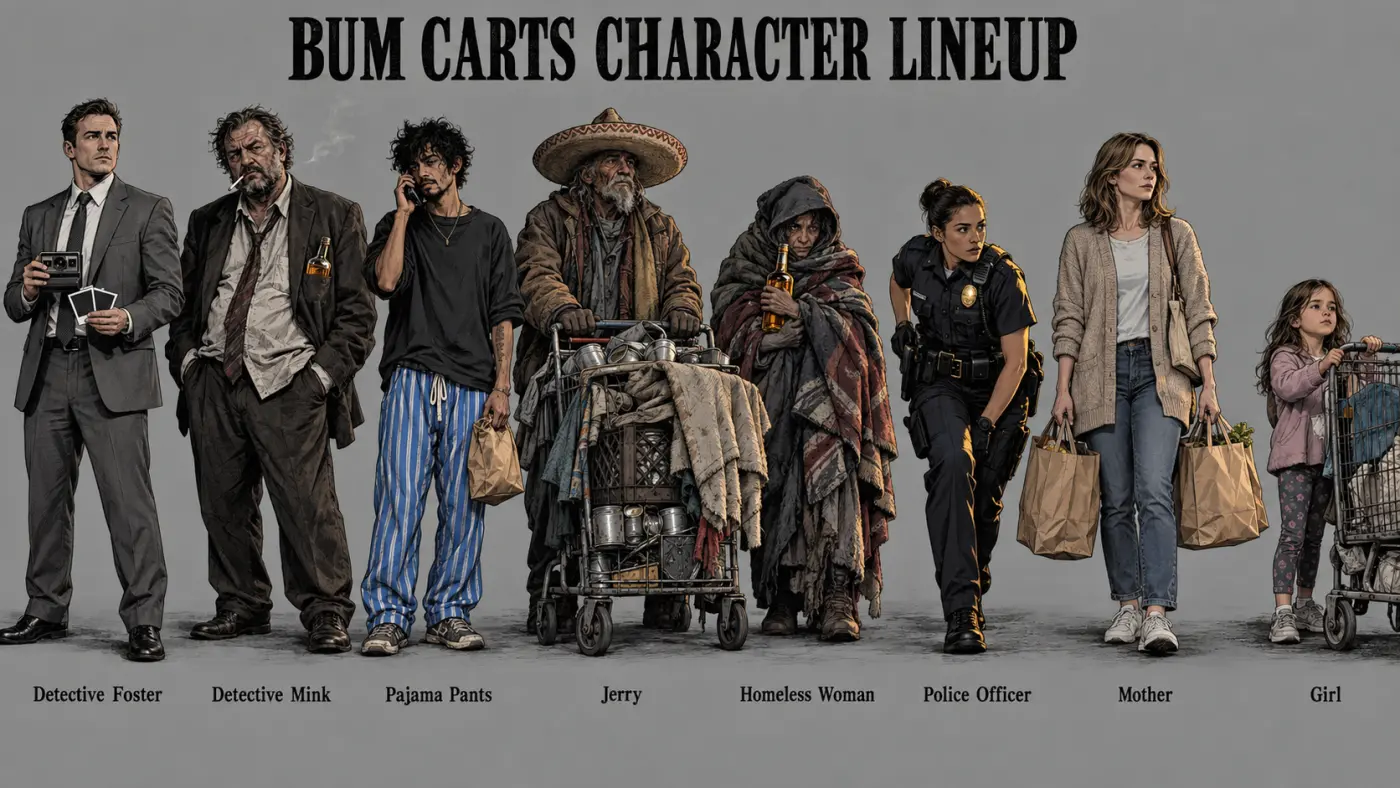
The script already knew who Foster and Mink were. Directing it means discovering how their timing, silences, glances, and physical distance can make Chris's comedy land on screen without rewriting what makes it unique. I love this story.
01
The first two episodes
The release begins before the cart becomes a case. First, we see why Foster needs a mystery and why Mink would rather go home.
Episode 01 / YouTube Soon
I Care When I'm On The Clock
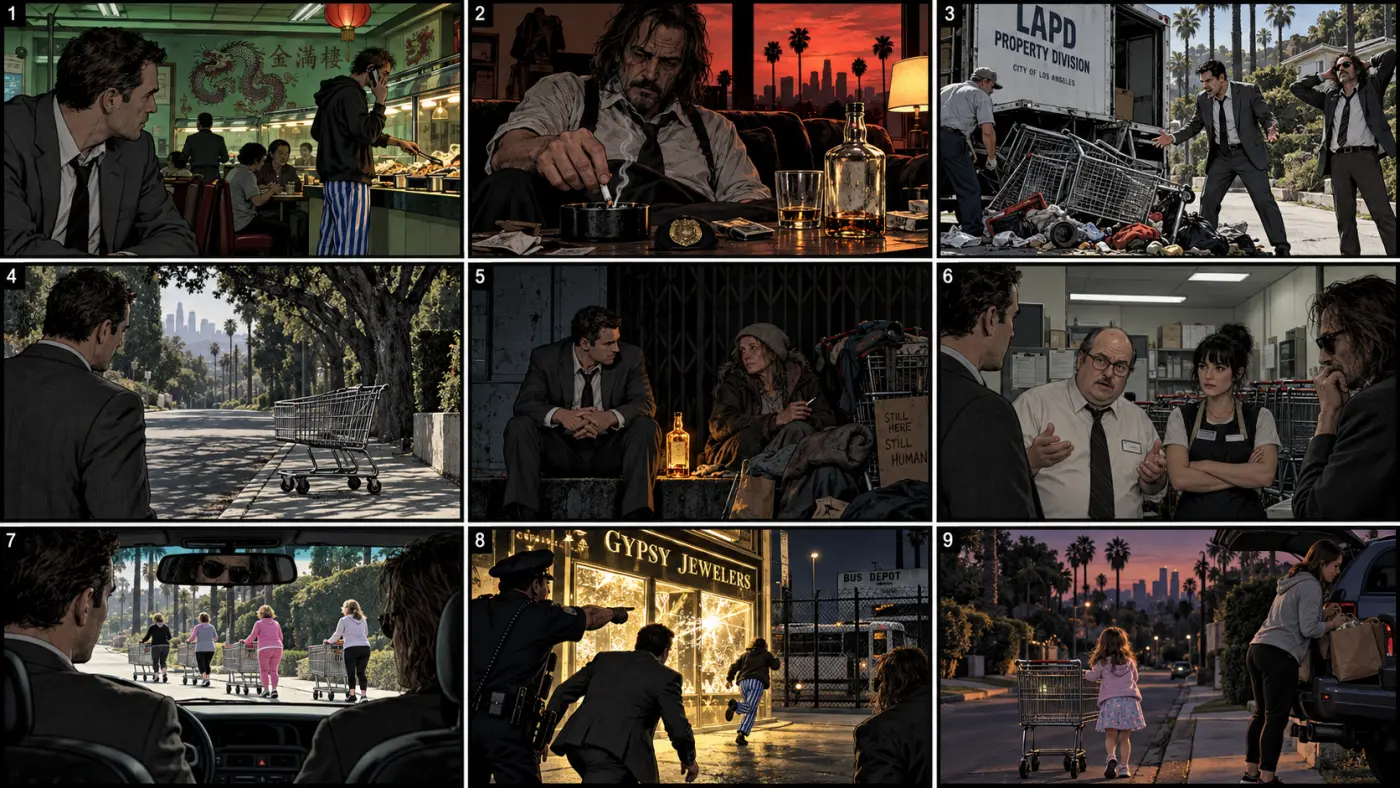
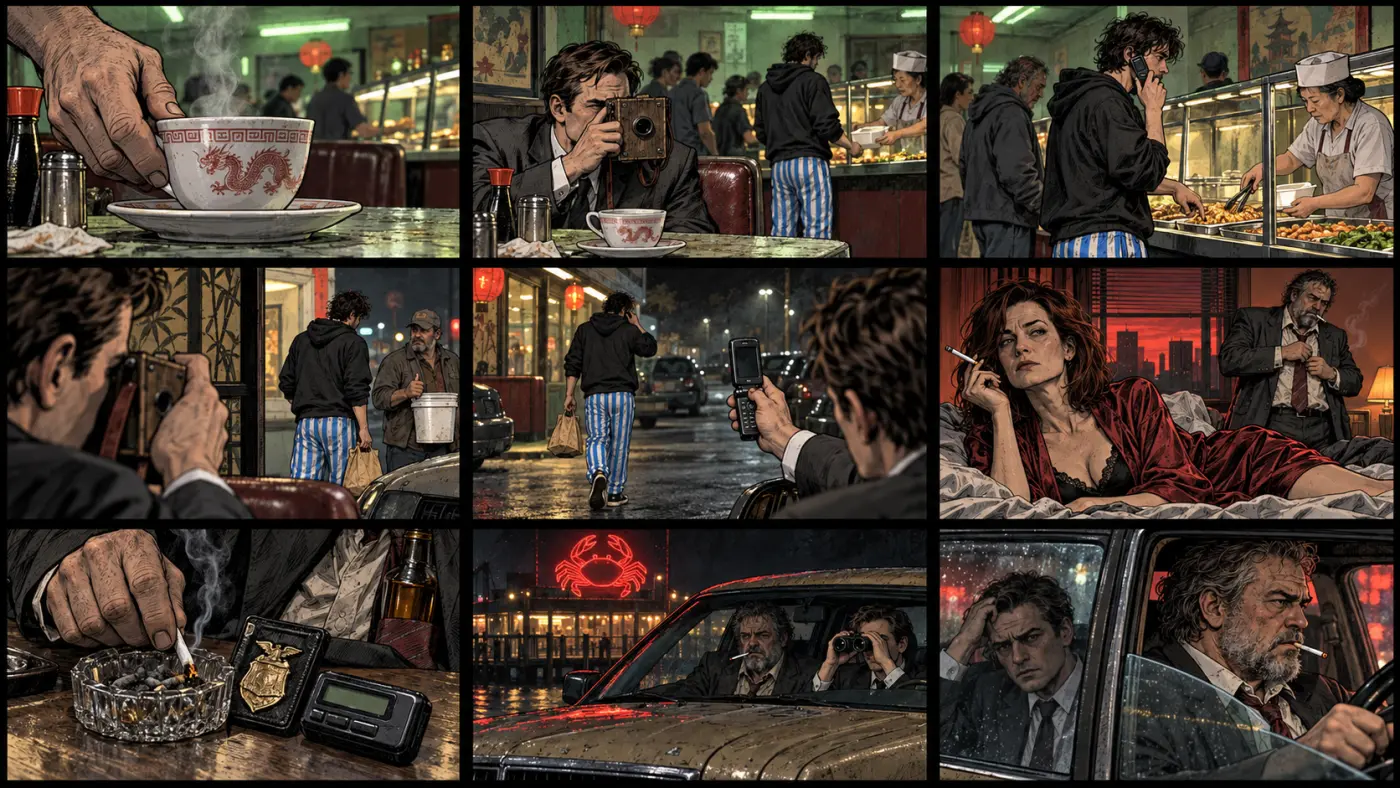
Foster follows a promising tip from a Chinese buffet to a Crab Shack stakeout. Nothing shows. Mink watches the clock while Foster keeps looking for the big case he believes is out there. Their night ends with tomorrow's least glamorous assignment: cart duty.
Episode 02 / YouTube Soon
Where's The Guy?
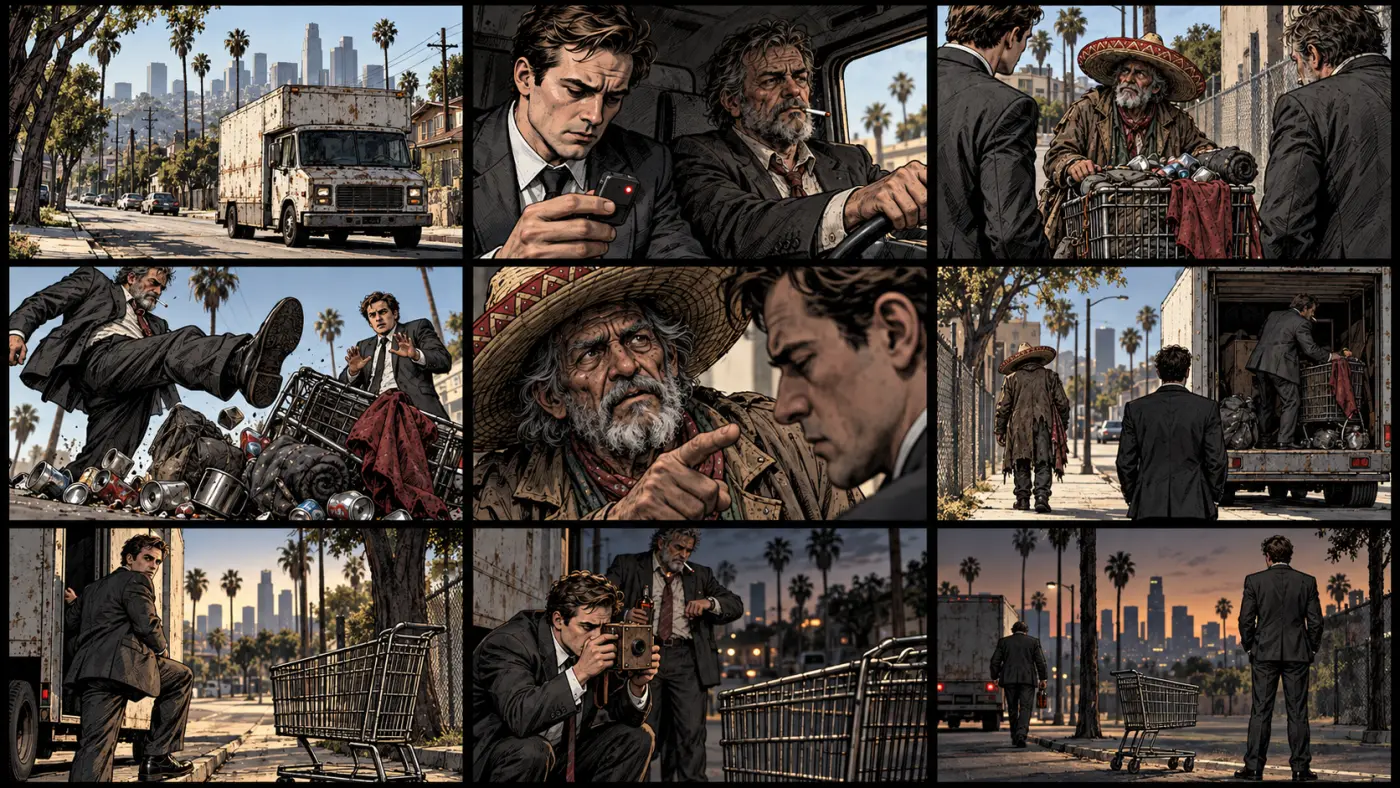
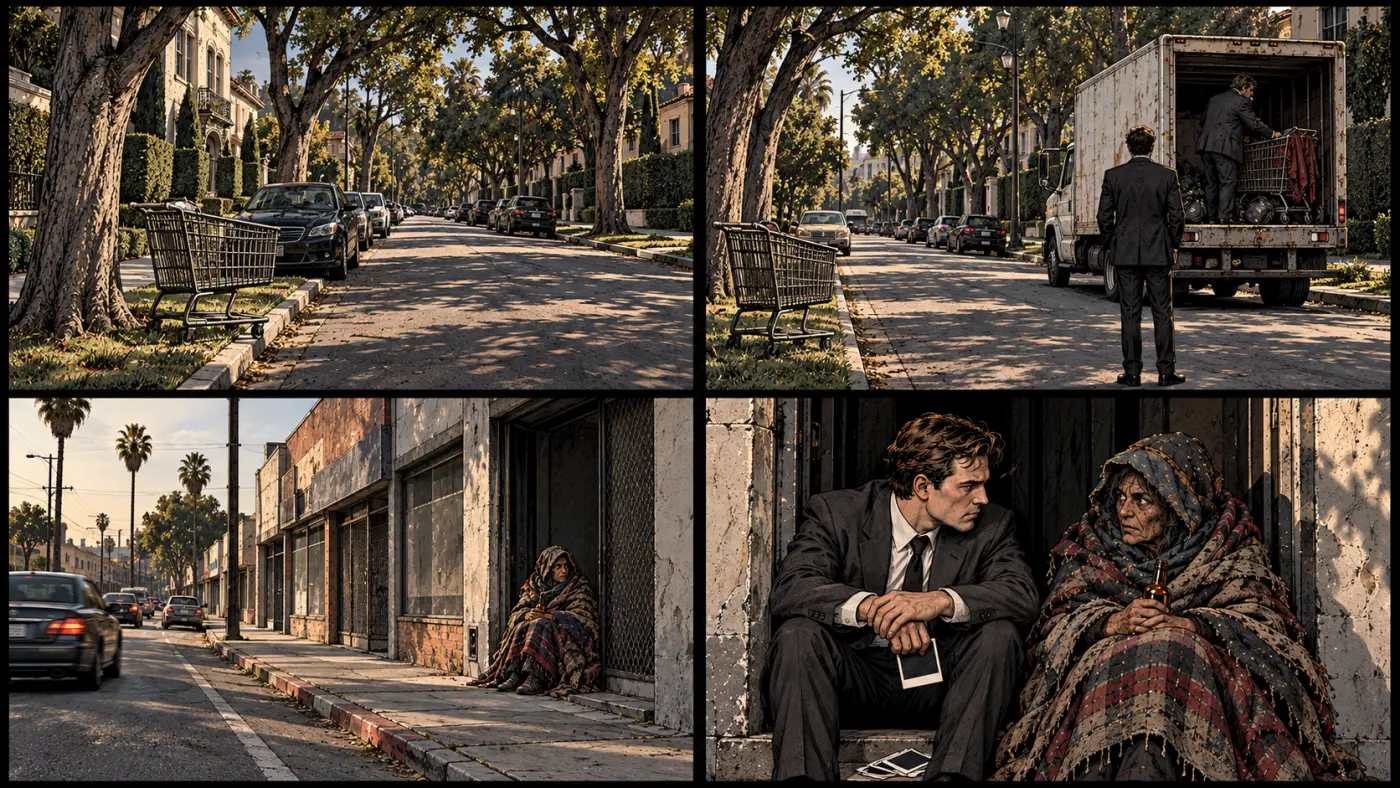
A routine cart pickup turns personal when Foster sees what the job costs Jerry, a man he knew from social services. Then Foster spots an abandoned, untagged cart. Mink sees something to haul away. Foster sees a person who may be missing.
Coming first
Episodes 1 and 2 introduce the partnership, the dark comedy, and the moment an ordinary assignment becomes a mystery. Their YouTube premiere links will appear here when the episodes are ready.
02
Make one ordinary cart impossible to ignore
Foster's theory has to feel human enough to follow, funny enough to question, and dangerous enough to fear.
The work began with one promise: protect Chris Colebank's latest draft, preserve the characters, and make the investigation easy to follow without rewriting his dialogue.
The governing idea
Foster sees an abandoned cart and refuses to treat its absent owner as invisible. As his concern hardens into certainty, every new clue asks whether he is noticing what others ignore or seeing what he wants to see.
What I kept from the script
I checked every dialogue choice against the latest draft. I kept one disconnected flashback outside the main film because it pulls attention away from the cart investigation and its ending. It may return later as a separate illustrated chapter.
03
The audience must want Foster to be right
Every clue pushes the case forward while one ordinary explanation remains possible. The tension comes from watching conviction outrun proof.
Story rule 01
Protect the dramatic distance
The audience can question Foster without the film stepping outside his investigation to explain what to think.
Story rule 02
Ordinary evidence stays visible
Every criminal theory is challenged by mundane information, keeping the film from endorsing Foster's certainty.
Story rule 03
The image repeats
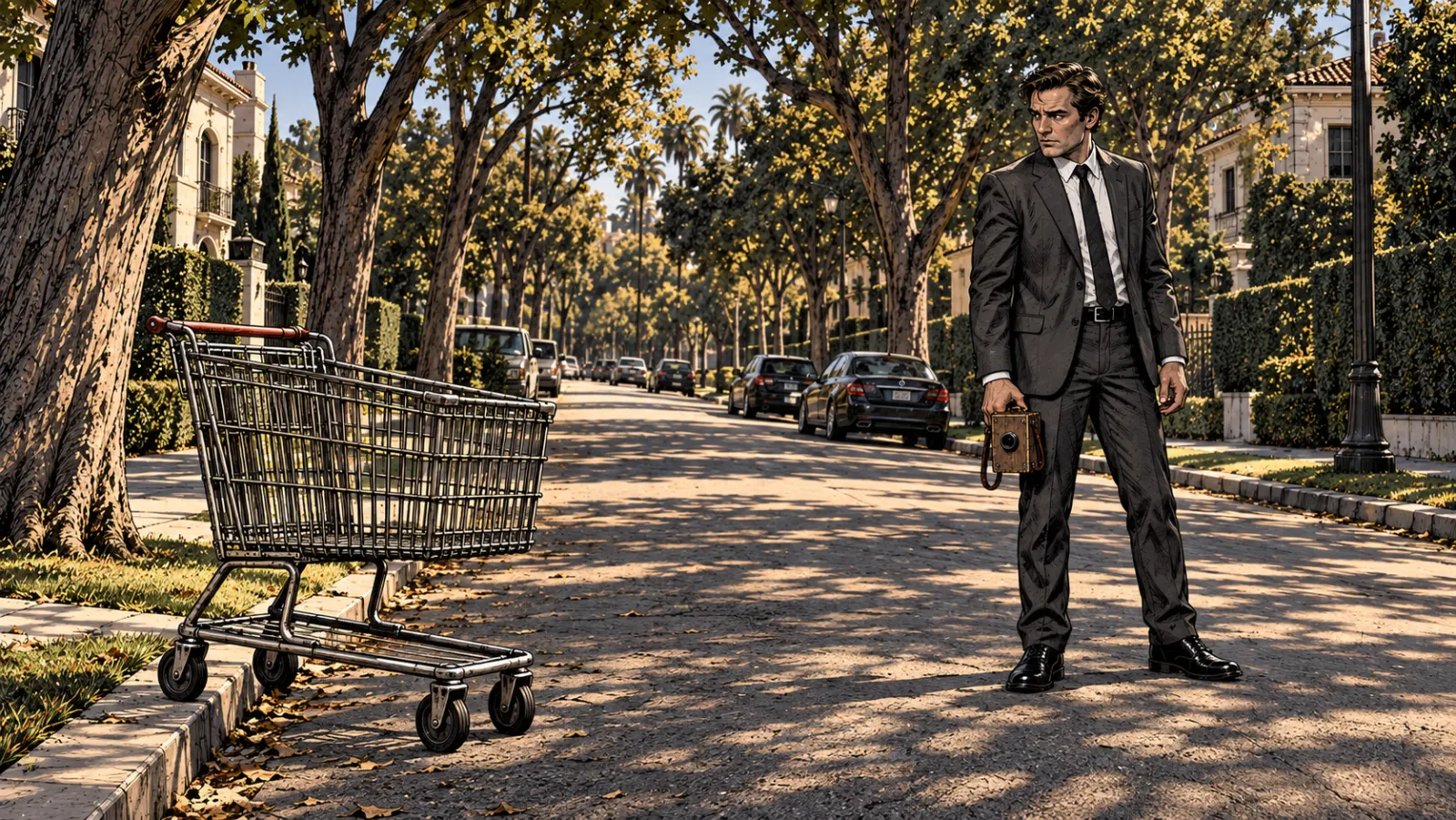
A recurring cart composition lets the same ordinary object gather new meaning as Foster moves deeper into the case.
Episode 2Jerry's accusation becomes personal for Foster. By the end, Mink leaves while Foster stays behind with the cart.
04
Los Angeles becomes the pressure around the case
Every frame must make the same city feel ordinary to Mink and charged with meaning to Foster.
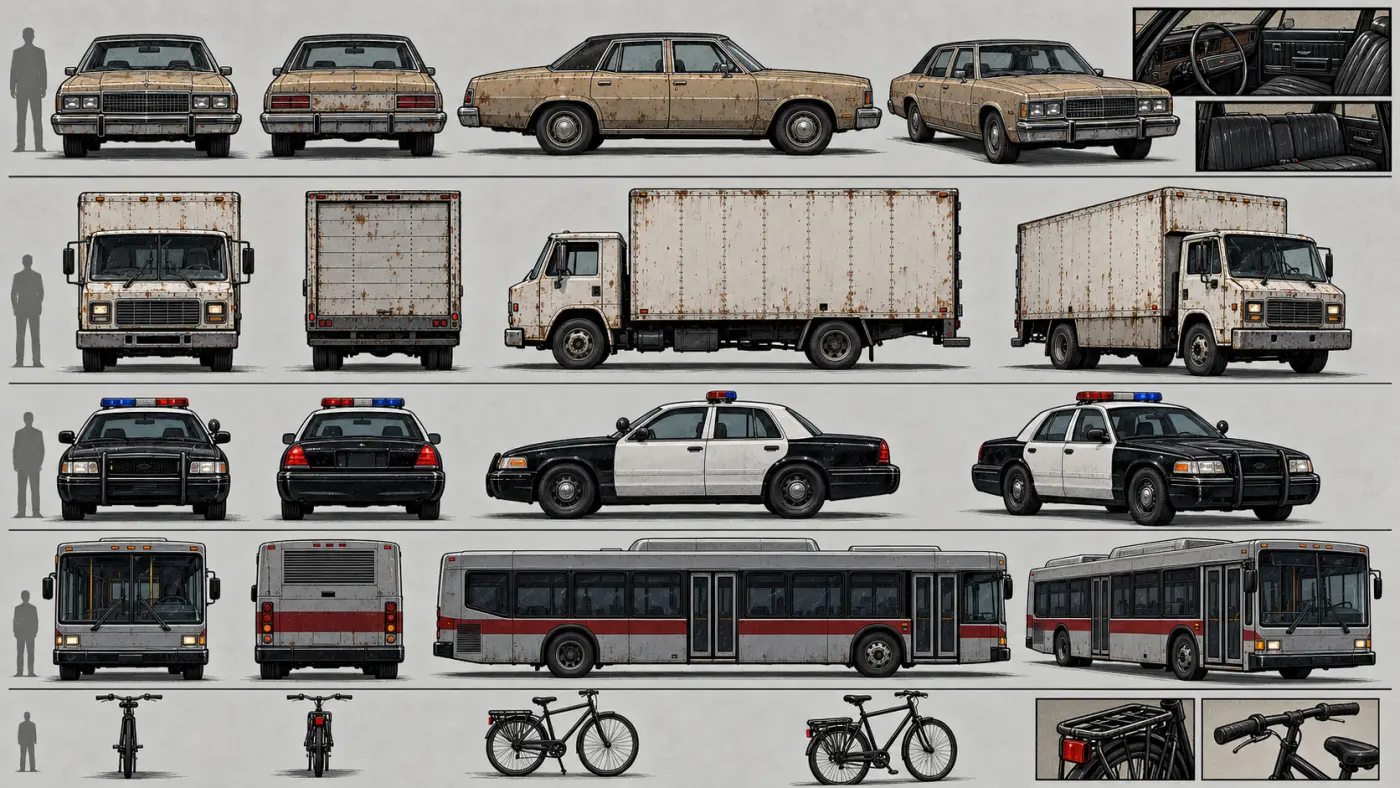
Palette + toneCharcoal, cream, natural green, and sodium warmth. Muted red appears only when the story needs emphasis.The peopleWardrobe, age, posture, scale, and personal objects help each character feel recognizable from scene to scene.Geography + lightReadable Los Angeles geography comes first. Negative space and practical light then carry isolation and doubt.The objectsThe vehicles and carts need the same proportions, wear, and personality every time they return.
05
How the mystery tightens
Each choice either pulls Foster deeper into the case or gives the audience a reason to doubt him.
01 / Performance
Hold on Foster's reaction
His concern needs to feel personal before the investigation becomes extreme. If we understand why he cannot walk away, the escalation feels human.
02 / Evidence
Keep ordinary explanations believable
I do not want the film to prove Foster right too early. The everyday clues give us room to question his certainty.
03 / Distance
Pull Foster and Mink apart
Foster moves toward the mystery while Mink keeps trying to leave it. Their growing physical distance tells us what dialogue does not.
04 / Image
Let the cart carry the question
By returning to similar compositions, the film keeps asking whether the object has changed or only Foster's interpretation of it.
Why this frame mattersThe empty space makes Foster's attention visible. The cart stays ordinary while his mind begins turning it into something else.
06
The cheapest mistake is the one I catch on paper
Before paying for motion, I compressed the original 21-page script into an episodic film without rewriting Chris's dialogue or sanding away its odd rhythm.
01 / Edit
Cut repetition, not Chris's voice
I removed repeated coverage and kept every retained dialogue line aligned with the latest draft. The goal was not to modernize the writing. It was to make the cart investigation move.
02 / Detour
Move the fun scene that stops the film
One funny flashback interrupted the mystery and required its own production system. I moved it outside the main film as a possible illustrated bonus chapter rather than force it into the episode run.
03 / Timing
Let the animatic argue back
The silent timing pass allocates space before performance, sound, and motion are final. If a beat does not read there, rendering it beautifully will not rescue it.
04 / Cost
Approve one frame before buying motion
The first clean production keyframe now locks Foster, the cart, the street, and their negative space. Paid motion waits until the image proves that the story and continuity can survive the next step.
What I would carry into client development
Storyboards are allowed to be wrong. That is cheaper than asking the finished film to apologize. The purpose of development is to find the weak decision while it is still easy to change.
07
From one approved frame to a finished film
The film is in production. The story, cast, locations, episode boards, and first approved keyframe now drive the scene build.
Read the story
Find what each character wants, what changes, and where the ending should leave us.
Find the look
Choose the people, places, objects, color, and camera language that belong in this world.
See the film early
Use storyboards and rough timing to discover what works before finishing every scene.
Build it in stages
Approve the strongest images, bring them to life, then shape the edit, sound, color, and final release.
From page to frameThe character and location references keep the world consistent. The episode boards help me decide what every shot needs to reveal.
Where the film is now
The story, look, cast, locations, and episode boards are ready. Episodes 1 and 2 are the first release unit, and I am now turning their strongest frames into finished scenes. The edit, sound, color, captions, and YouTube premieres will follow.
Work directly with Maxwell from concept through delivery
Does your brief need a cinematic world?
Send the audience, message, launch date, and required placements. I will identify the story worth building around them, then align treatment, visual system, storyboard, and production approvals before delivery.