A bulletin changes the evening
The broadcast brings the event into a familiar home. Neighbors leave their houses to find out what came down.
Director's Vlog / Independent Short Film
A fireball. A roadblock. A reporter who cannot answer one final question.
A fictional dramatization using AI-generated visuals and a recreated news broadcast. Characters, dialogue and visual details are creative interpretations, not authenticated archival footage. The film does not establish what the object was.
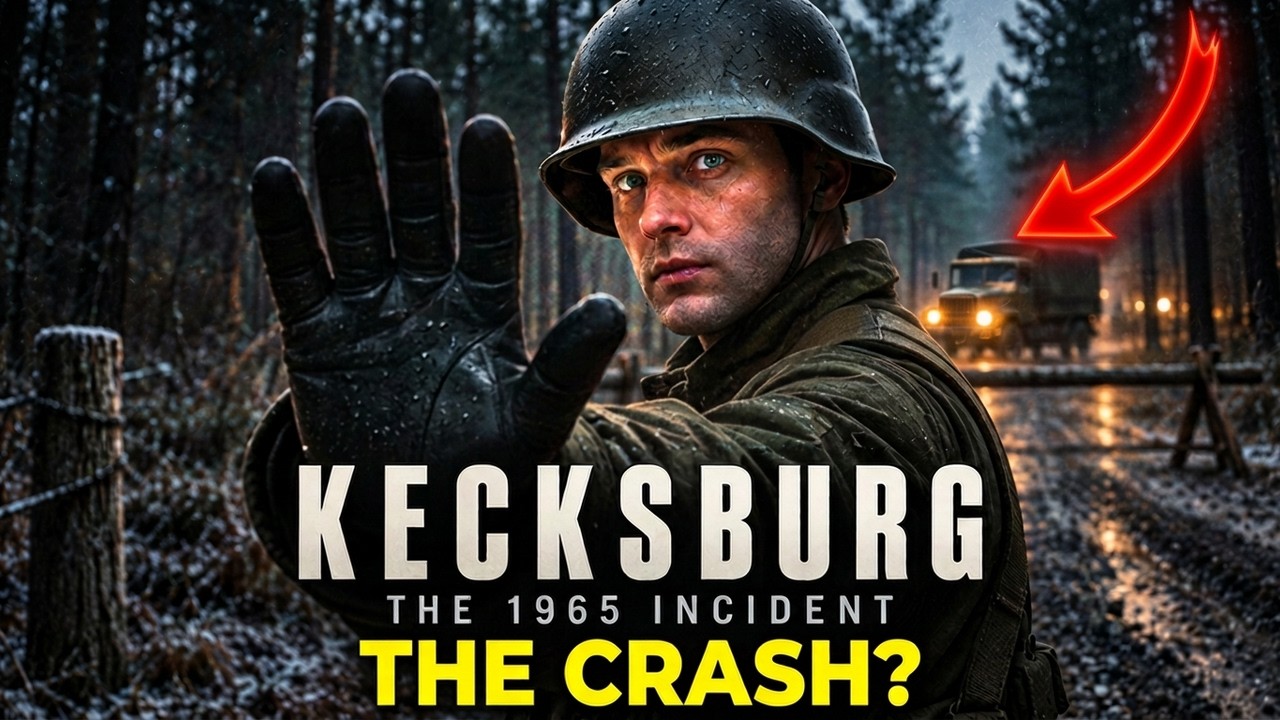
A special bulletin interrupts a household television. Neighbors head toward the woods. A field correspondent describes an unfamiliar object, but soldiers close the road before the town gets an answer. The film moves between the studio, the checkpoint and the family listening at home.
The title asks what happened. The film presents a fictional interpretation of reported accounts, not evidence of an extraterrestrial recovery. Its news studio and field report are recreated. No broadcaster commission, partnership or endorsement is claimed.
01
The object creates curiosity. Losing access to it creates the pressure.
The witnesses are ordinary people trying to understand an extraordinary interruption. The reporter begins with a clear account. His language becomes hesitant as the load is covered. The anchor keeps asking from the safety of the studio, while the family has only the television to go on.
02
Each stage brings the witnesses closer to the object, then takes that access away.
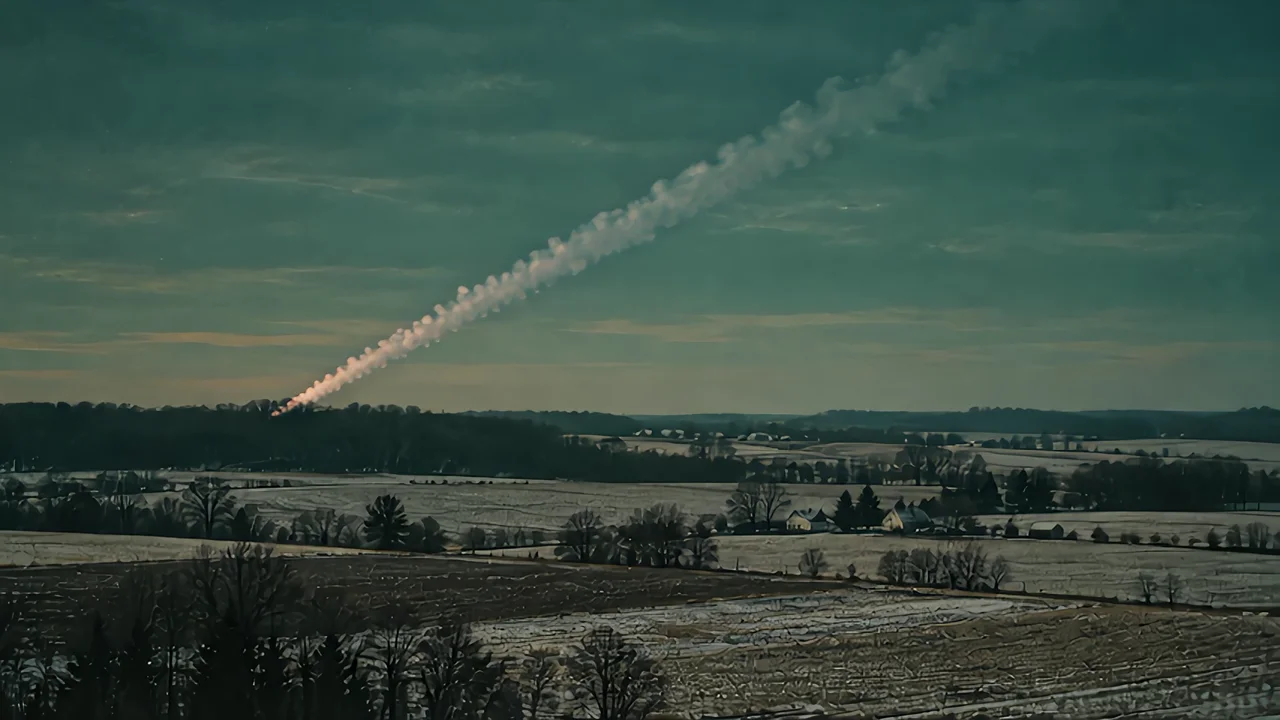
The broadcast brings the event into a familiar home. Neighbors leave their houses to find out what came down.
Flashlights reveal the object's surface and markings. The report describes what was seen without explaining its origin.
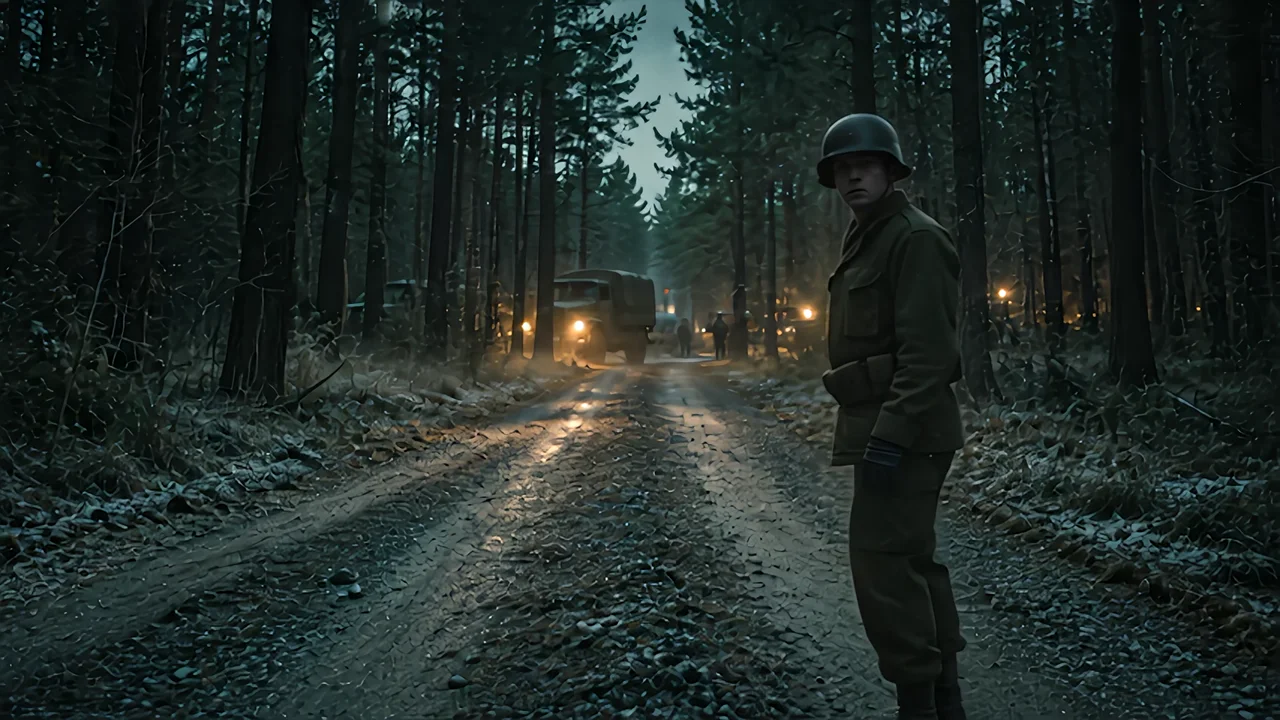
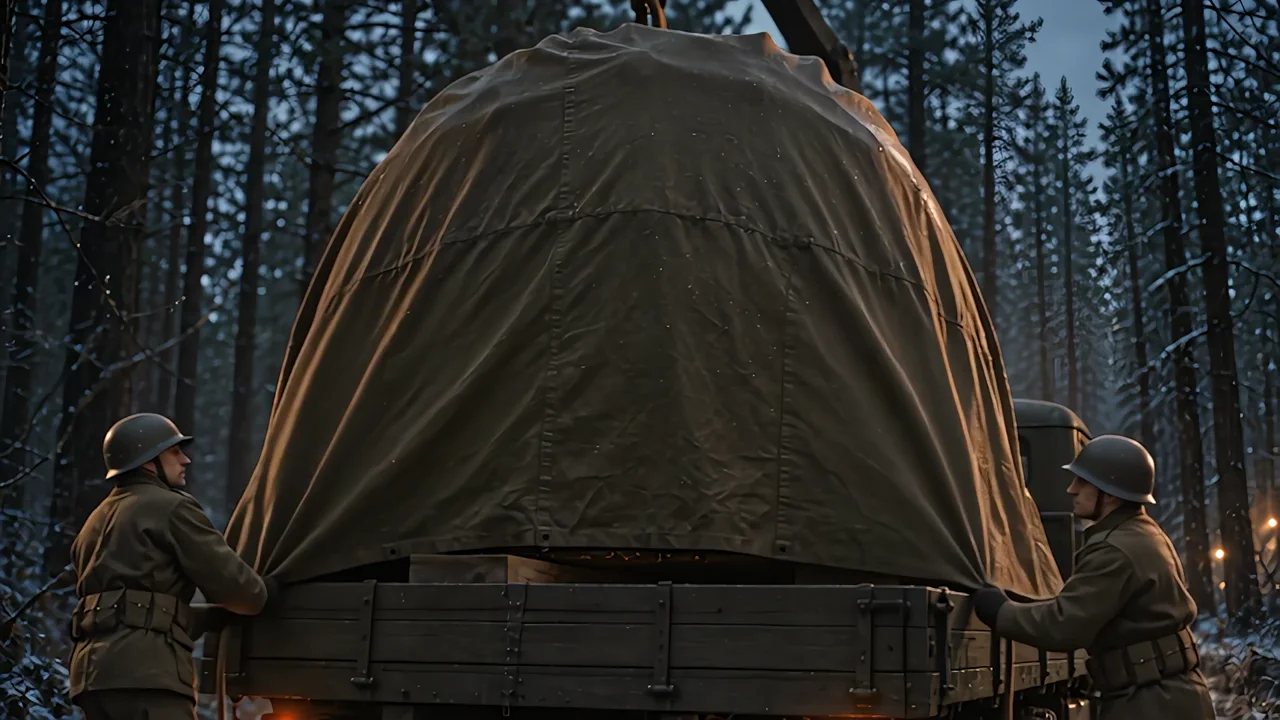
Soldiers stop access. A large load is covered on a truck. The reporter signs off without answering the anchor's last question.
03
The look moves between the uncertainty outside and the ordinary rooms where people hear about it.
Muted teal woods, bare trees and wet roads carry the exterior scenes. Lamps and house windows supply amber light. The recreated broadcast uses monochrome studio images, screen texture and restrained framing. The contrast makes the event feel close to everyday life rather than detached spectacle.
04
The studio asks questions. The field report supplies fragments. Returning to those faces keeps the mystery tied to people rather than only to the object.
Ground contact, adult figures and the truck establish its size. Close views of the markings add information without identifying it.
The loading and covering sequence connects discovery to loss of access. A tarp does more for the final question than another explanation would.
The reporter's signoff ends the report, not the uncertainty. The recreated broadcast cannot supply the resolution the anchor asks for.
05
The early script described the event. The later edit gave the broadcast a household, a physical screen and a visible restriction.
The early production plan opened with a location title and silent sky shots. The final local export opens on television interference and brings the bulletin into the home.
The finishing pass repaired the household TV composite so the screen geometry stayed smooth and the news graphics remained readable.
The accepted motion cut replaced planned poses with movement in the search, restriction and cargo coverage. The final HD pass retained that sequence and narration.
The reviewed local export runs 2:25 at 1920 by 1080 and 24 frames per second. Selected scenes were AI-upscaled, with retained broadcast material. That is a delivery finish, not a claim of native HD generation.
A clear question, a controlled point of view and a few consequential actions can carry a short film. For a commercial, those decisions need to serve the audience and message before adding more spectacle.
06
Work directly with Maxwell
Bring the message, audience and format. We can shape the story and visual direction around what the film needs to do.
Start a project